Through a socialization event held on 28 July 2025, DJID outlined plans of implementing new technical requirements for broadcast radio receivers in car head units. Therefore, in the near future, the Ministry of Communication and Digital (KOMDIGI) through DJID plans to conduct an official public consultation for a draft regulation of the technical requirements for broadcast radio receivers.
However, it is planned that the technical requirements of broadcast radio receivers will be implemented two years after the technical regulation is official issued. Furthermore, this obligation also applies to specific product only, and car head unit product is one of the mandatory product to meet this new technical requirements.
In this article we will discuss all important notes from a socialization event of new technical requirements for broadcast radio receivers and more focus on broadcast radio receivers in car head units.
Limitations in the draft regulation of broadcast radio receivers in car head units
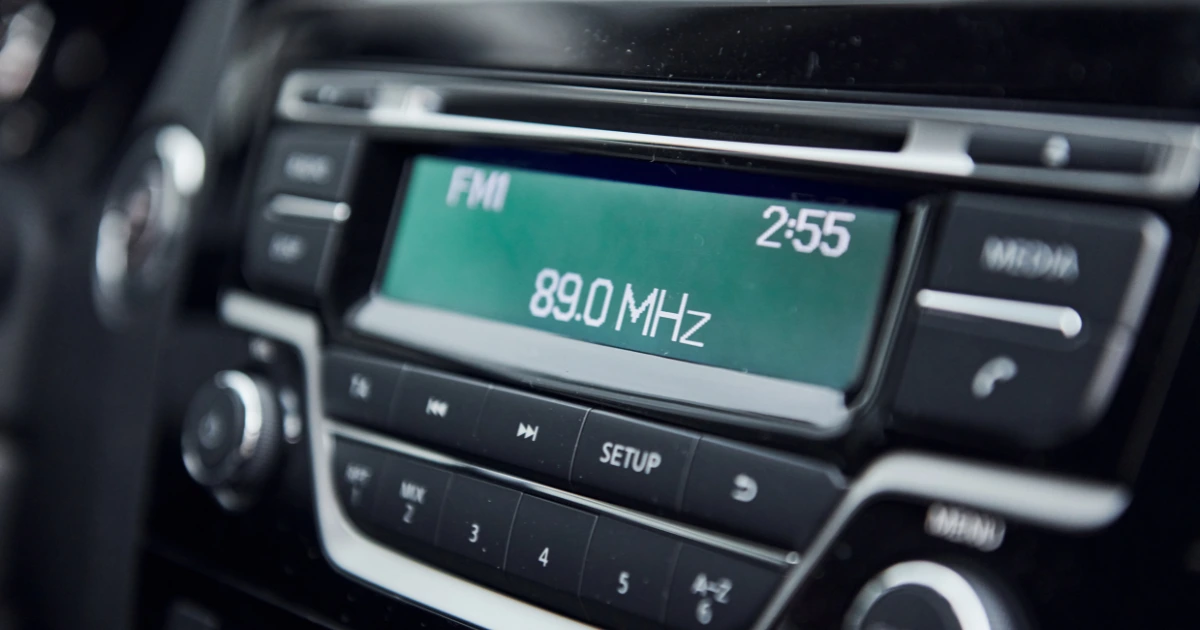
There are several limitations that need to be understood in implementing the technical requirements for broadcast radio receivers, as the requirements will be applicable particular products only.
Car head units are main certification object of this new technical requirements for broadcast radio receivers, so we will focus on broadcast radio receivers in car head units. Below are some of the limitations need to be known in draft regulations for broadcast radio receivers in car head units.
- Certification requirements only apply to broadcast radio receivers installed as head units in passenger cars.
- The vehicle type is limited to passenger cars only with a maximum seating capacity of 8 passengers, including the driver, or weighing no more than 3,500 kg.
- The sensitivity requirement for broadcast radio receivers of head units in passenger cars is the minimum signal level required to provide a specific sound quality.
- The adjacent channel selectivity requirement for broadcast radio receivers of head units in passenger cars is a measure of the receiver’s ability to receive the desired modulated signal without degradation due to unwanted signals that differ in frequency from the desired signal by a specified multiple of the adjacent channel spacing.
Technical requirements for broadcast radio receivers in car head units
The draft regulation outlines several technical requirements that must be met for the broadcast radio receiver feature in car head units. These requirements include power supply, electrical safety, EMC, RF, EWF or EWS, and functionality requirements.
The power supply, electrical safety, and EMC requirements remain the same as for other telecommunications devices. Let’s look closer to RF, EWF or EWS, and functionality requirements of broadcast radio receiver in car head units.
Operating frequency requirements
Broadcast radio receivers in car head units must operate to receive broadcast radio according to the table below.
| Frequency band | Technology standard | Broadcast radio receivers in car head units |
| 526.5–1606.5 kHz | AM | ✓ |
| 526.5–1606.5 kHz | DRM | |
| 2300–26100 kHz | AM | ✓ (Note) |
| 2300–26100 kHz | DRM | ✓ |
| 87.5–108 MHz | FM | ✓ |
| 87.0–108 MHz | DRM | ✓ |
| 174–230 MHz | DRM | ✓ |
| 174–230 MHz | DAB | ✓ |
Note: broadcast radio receivers specifically used in passenger cars in the form of full electric or hybrid electric vehicles are not required to have the ability to work using analog technology standards based on Amplitude Modulation (AM) on the MF and HF radio frequency bands.
Sensitivity requirements
Broadcast radio receivers in car head units must have a sensitivity according to the table below.
| Frequency band | Technology standard | Audio quality criteria | Wanted signal | |
| Center frequency | Required sensitivity (conducted) | |||
| 526.5–1606.5 kHz | AM | SNR ³ 22 dBQ ref 40 % AM | 0.999 MHz | -65 dBm |
| 2300–26100 kHz | AM | SNR ³ 22 dBQ ref 40 % AM | 9.650 MHz | -65 dBm |
| 526.5–1606.5 kHz | DRM | 10 seconds of audio without impairments | 0.999 MHz | -99 dBm |
| 2300–26100 kHz | DRM | 10 seconds of audio without impairments | 4 dan 19 MHz | -99 dBm |
| 87.5–108 MHz | FM | SNR ³ 40 dBQ ref ±60,8 kHz deviation, and 10 seconds of audio with no subjective impairments | 98 MHz | -90 dBm |
| 87.0–108 MHz | DRM | 10 seconds of audio without impairments | 100 MHz | -100 dBm |
| 174–230 MHz | DRM | 10 seconds of audio without impairments | 200 MHz | -100 dBm |
| 174–230 MHz | DAB | 10 seconds of audio without impairments | 202.928 MHz | -94 dBm |
Adjacent channel selectivity requirements
Broadcast radio receivers in car head units must have an adjacent channel selectivity according to the table below.
| Frequency band | Technology standard | Audio quality criteria | Wanted signal | |
| Center frequency | Conducted power | |||
| 526.5–1606.5 kHz | AM | SNR ≥ 22 dBQ ref 40% AM | 999 MHz | -59 dBm |
| 2300–26100 kHz | AM | SNR ≥ 22 dBQ ref 40% AM | 9.650 MHz | -59 dBm |
| 526.5–1606.5 kHz | DRM | 10 seconds of audio without impairments | 999 MHz | -91 dBm |
| 2300–26100 kHz | DRM | 10 seconds of audio without impairments | 4 dan 19 MHz | -91 dBm |
| 87.5–108 MHz | FM | SNR ≥ 40 dBQ ref ±60,8 kHz deviation, and that there shall be 10 seconds of audio with no subjective impairments | 98 MHz | -84 dBm |
| 87.0–108 MHz | DRM | 10 seconds of audio without impairments | 100 MHz | -92 dBm |
| 174–230 MHz | DRM | 10 seconds of audio without impairments | 200 MHz | -92 dBm |
| 174–230 MHz | DAB | 10 seconds of audio without impairments | 202.928 MHz | -70 dBm |
| Frequency band | Technology standard | Unwanted Signal | ||||
| Channel | N=1 | N=2 | N=3 | N=4 | ||
| 526.5–1606.5 kHz | AM | ±N × 9 kHz | -5 dB | 25 dB | 35 dB | N/A |
| 2300–26100 kHz | AM | ±N × 10 kHz | -5 dB | 25 dB | 35 dB | |
| 526.5–1606.5 kHz | DRM | ±N × 9 kHz | 25 dB | 35 dB | 45 dB | N/A |
| 2300–26100 kHz | DRM | ±N × 10 kHz | 25 dB | 35 dB | 45 dB | N/A |
| 87.5–108 MHz | FM | ±N × 100 kHz | N/A | 3 dB | 17 dB | 30 dB |
| 87.0–108 MHz | DRM | ±N × 100 kHz | 35 dB | 40 dB | 45 dB | N/A |
| 174–230 MHz | DRM | ±N × 100 kHz | 35 dB | 40 dB | 45 dB | N/A |
| 174–230 MHz | DAB | ±N × 1712 kHz | 35 dB | 40 dB | 45 dB | N/A |
Early disaster warning feature requirements (EWF or EWS)
Broadcast radio receivers used in passenger cars that operate with digital technology standards of DRM and DAB+ must meet the following early warning features:
- DRM Emergency Warning Functionality (EWF): audio, Journaline text, alarm announcements, and AFS.
- DAB Emergency Warning System (EWS): audio, Journaline text, alarm announcements, and EWS.
Functionality requirements
Broadcast radio receivers used in passenger cars that operate with digital technology standards of DRM and DAB+ must meet the following functional requirements:
- User interface
- Tuning
- Service selection
- Decoding and demodulation
- Audio
- Service information
- Data applications
This new technical requirements will serve as a new regulation for DJID certification in the future. Therefore, it is important to prepare and understand each technical requirements, especially its official public consultation is opened. So, if you have any question related to DJID certification, please don’t hesitate to contact us by sending enquiry to info@narmadi.com.