The use of internet to support our daily activity is quite vulnerable to cyber threats. The threats of viruses, malware, or cyber attacks can affect internet users and cause losses to them. With the potential of these threats, special security is needed so that it can protect computer devices when accessing the internet. One of the protection systems commonly used in computer networks is a firewall. The firewall could be in the form of a firewall hardware.
In this article we will discuss all about firewall and DJID certification requirements for firewall hardware in Indonesia.
What is firewall?
Firewall is a security system used to control access to a computer network or system connected to the internet. A firewall acts as a barrier or guard that controls data traffic between different networks.
Firewall can monitor and analyze all data entering and leaving the network, block access from unknown sources, and protect the system from threats such as viruses, worms, trojan horses, and other cyber attacks.
How does firewall work?
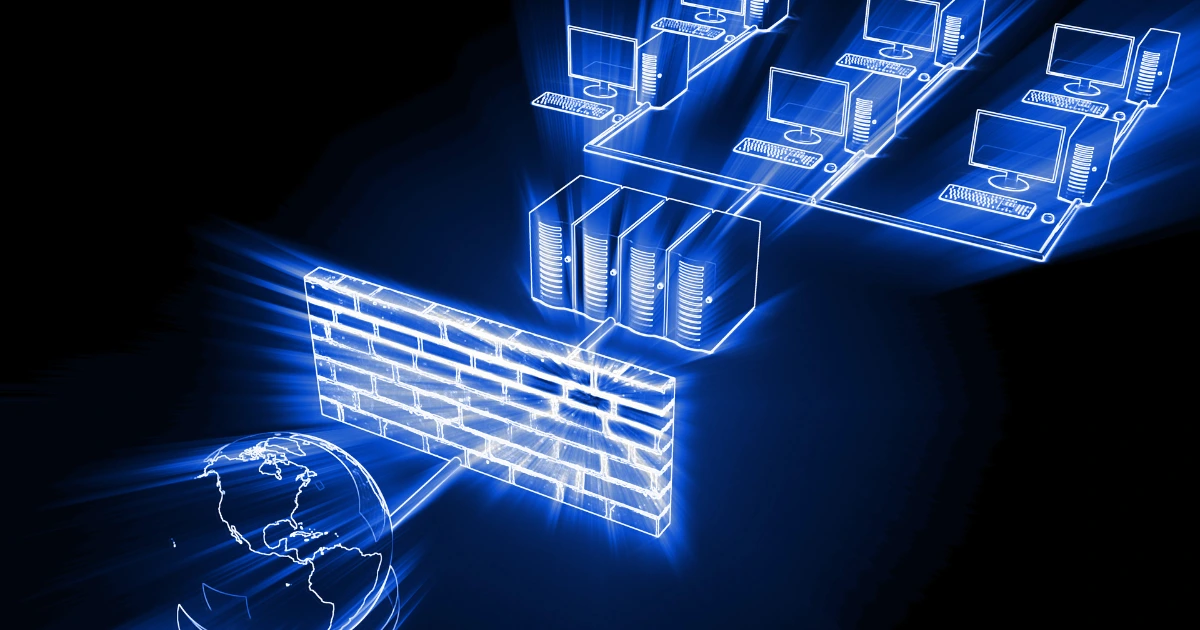
Firewall works by restricting access to networks and systems based on certain criteria. This is done by setting rules and policies that determine who can access the network and systems, and what types of data are allowed in and out of the network.
For example, if an organization wants to block access to websites that are malicious or contain inappropriate content, then the firewall can be instructed to block all access to those websites. Firewall can also restrict the types of data that are allowed in and out of the network, such as email or files related to the organization’s business.
In addition, a firewall can monitor network traffic and report suspicious activity. If there is suspicious activity such as a cyber attack, the firewall will issue an alert and block access to the system or network to protect the organization’s information and data.
Firewall can be implemented using software or hardware, or a combination of those two components. Firewall hardware is a stand-alone device that connected to a network, while firewall software is a programs that installed on a computer or server.
Types of firewall
Types of firewall based on their methods are divided into three: firewall software, firewall hardware, and firewall cloud-based.
Firewall software
Firewall software is installed to protect only one device, it could be a laptop, computer, server, and so on. This means that users can only install one firewall software on each device they want to protect. Firewall software is able to provide high protection to its devices.
Behind its advantages, firewall software also has disadvantages that users need to consider. Firewall software requires larger storage capacity and RAM to operate optimally. In addition, firewall software also requires configuration and maintenance, it is quite time consuming.
Firewall hardware
Firewall hardware come in the form of hardware, its functions is to filter traffic entering and leaving a computer network. A firewall hardware has its own resources, so it will not take up the storage capacity and RAM of the user’s computer. Firewall hardware is the right choice for A large company with extensive computer networks.
The advantage of firewall hardware is able to protect many computers with one device, providing high-level protection, and ease of operation. Unfortunately, firewall hardware requires quite high costs and qualified skills to operate them than firewall software. Another weakness of firewall hardware, it allows cyber attacks from internal computer network.
Firewall cloud-based
Cloud-based technology has also been implemented in firewall. Generally, firewall cloud-based is known as Infrastructure-as-a-Service (IaaS) or Platform-as-a-Service (PaaS). This option is ideal for businesses that do not have IT staff who are experts in cybersecurity because their operations are run by the firewall cloud-based service provider.
The advantage of a cloud-based firewall is that users do not need to manage it. The firewall cloud-based service provider will install it and resolve any issues that arise in the process. Firewall cloud-based also have high scalability so it can be adjusted to organization business needs.
The disadvantage is that firewall cloud-based are more vulnerable in terms of privacy and transparency about how it works. So, it is important for choosing a trusted and easy-to-work firewall cloud-based service provider.
DJID certification for firewall hardware
Firewall hardware uses the ethernet protocol to connect devices to a computer network using a LAN cable. Therefore, a firewall hardware can be classified as a type of ethernet network telecom devices that must meet applicable technical standards through DJID certification process.
This obligation is refered to technical regulation KEPMEN KOMINFO No. 60 year 2022. Based on the regulation, ethernet network telecom device is a device that has two or more ethernet interfaces in accordance with the IEEE 802.3 standard and used to connect two or more devices in a network via these interfaces.
Based on following ethernet network telecom devices configuration, firewall is also fall into ethernet network telecom devices category.
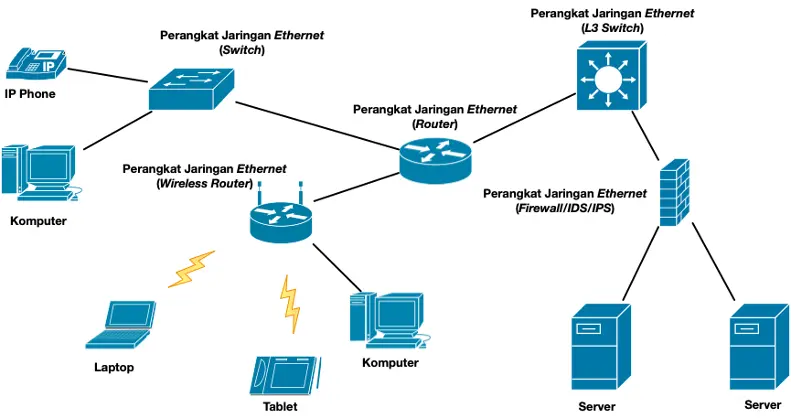
Before processing the DJID certification, it is necessary for applicants to perform EMC, Electrical safety, and Laser safety test for firewall hardware. The EMC, Electrical Safety, and Laser Safety test reports will be used for the DJID certification.
EMC test for firewall hardware
Currently, the EMC test for firewall hardware is still only EMC emission test. The testing for EMC emission should be performed under the standard of CISPR 32. And because a firewall hardware usually has more than two ethernet ports, then it is necessary to perform EMC conducted test at telecom ports.
Type of ethernet ports that widely used in firewall hardware is RJ45 ports. The RJ45 port is a data port that used to connect a network cable to a device such as a computer, router, or firewall hardware.
The required EMC emission test for firewall hardware is EMC radiated and conducted emission. The testing of EMC radiated emission is carried out in the frequency range of 30 – 1000 MHz and 1 – 6 GHz. Meanwhile, the testing of EMC conducted emission is carried out at main terminal power and telecom ports in the frequency of 150 kHz – 30 MHz.
Electrical safety test for firewall hardware
Electrical safety test is conducted based on international standard of IEC 60950, including for firewall hardware. There are two testing parameters for electrical safety testing, which are touch current and electrical strength.
The testing of touch current is conducted by attaching the test leads to particular parts of firewall hardware that possibly hold by hand. The results of touch current test should be less than 3.5 mA.
The testing of electrical strength is carried out by supply an excess voltage to firewall hardware. The results of electrical strength test should be no disconnection when it is given a voltage from 1500V until 3000V.
Laser safety test for firewall hardware
Since most of firewall hardware has SFP ports, then it is mandatory for firewall hardware to perform laser safety test. SFP ports are a slot on an firewall hardware where an SFP module is installed.
The SFP transceiver, also known as an SFP module, is a metal component that can convert gigabit electrical signals into optical signals. This component is used to connect optical network cables for data transmission.
For the certification process, DJID only accepts laser safety test report issued by local labs. Currently, there are already three labs in Indonesia that have a scope of laser safety testing, which are Telkom Bandung, Sucofindo, and BBPPT Lab. Laser safety test is conducted based on the international standard of IEC 60825.
If you have any question related to DJID certification, please don’t hesitate to contact us by sending enquiry to info@narmadi.com.