Transportation systems have undergone significant development in last decades, marked by the emergence of autonomous vehicles and smart cities. Vehicle-to-Vehicle (V2V) and Vehicle-to-Infrastructure (V2I) communications are two important components of an intelligent transport system aimed at improving traffic efficiency and safety. V2V and V2I communications are forms of intelligent transport system utilize wireless networks that enable real-time information exchange. One type of wireless technology used for intelligent transport systems is Dedicated Short-Range Communication (DSRC).
In this article we will discuss about intelligent transport systems technology and its regulatory control in Indonesia.
What is intelligent transport system?
Intelligent Transport System (ITS) is the application of communication technology in the transportation sector, applied both to the infrastructures and vehicles. This system can result in a more reliable, efficient, and safer transportation system.
Vehicle-to-Vehicle (V2V) is a communication technology that allows vehicles to exchange information with each other, directly using wireless technology. The information can include data on the speed, direction, position, and condition of other vehicles.
Vehicle-to-Infrastructure (V2I) is a communication technology that allows vehicles to communicate with road infrastructure, such as traffic lights, signs, or traffic control centers. Through this communication, vehicles can receive important information from the infrastructure or transmit data for traffic management.
Both V2V and V2I are designed to improve safety by providing vehicles with relevant information about other vehicles in their vicinity. This information exchange allows vehicles to take preventative action to avoid accidents or other traffic incidents.
The Working principle
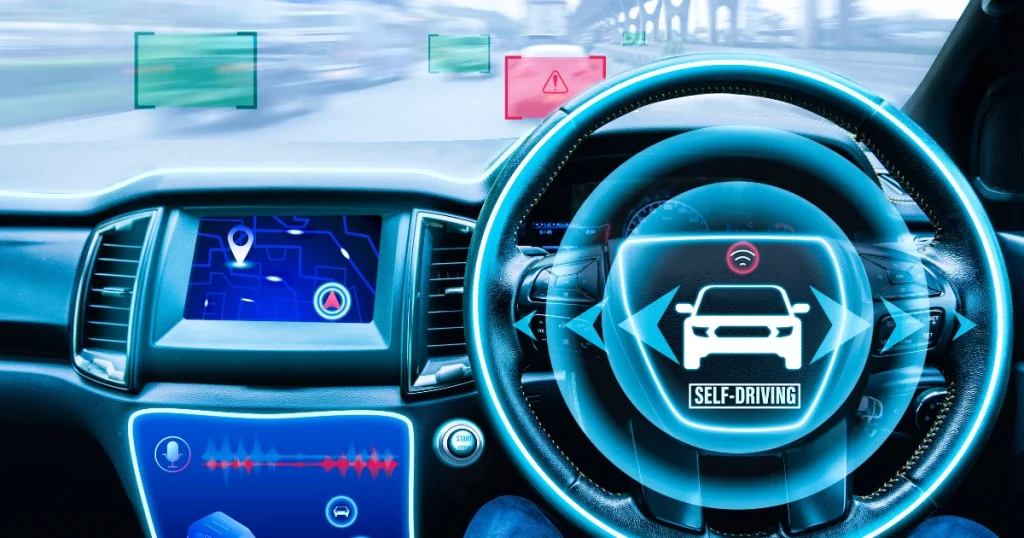
The ITS concept involves traffic monitoring, data collection and analysis, communication between vehicles and infrastructure, data-driven decision making, traffic management systems, and providing travel information to users. The V2V and V2I communications as part of ITS generally work using wireless technologies designed to transmit data within a relatively short radius.
V2V (Vehicle-to-Vehicle) communication allows vehicles equipped with this technology to communicate directly without intermediaries such as cell towers. Through this communication, vehicles can exchange real-time data such as GPS coordinates, current speed, direction (north, south, east, or west), acceleration, and brake status (whether the brakes are being applied or not).
Meanwhile, in V2I (Vehicle-to-Infrastructure) communication, vehicles interact with road elements such as traffic lights, signs, and traffic control centers. The data exchanged includes road conditions, such as potholes, accidents, or weather changes, as well as information related to traffic signals, such as the duration of green lights.
These two communication technologies generally use DSRC (Dedicated Short-Range Communications), which operates in the frequency band of 5.9 GHz. DSRC technology enables short-range communication with low latency, which is crucial for vehicle safety and efficiency.
DSRC telecommunications devices are intelligent transport system devices that refer to the IEEE 802.11 standard, which was later developed into the IEEE 802.11p standard. This standard has added allocations for wireless access in vehicular environments used to support the ecosystem in intelligent transport systems (ITS).
Challenges for implementation
Intelligent transport system is a breakthrough in overcoming various traffic problems, but in the implementation process it still faces several challenges.
- Security and Privacy: Because V2V and V2I involve real-time data communication, protection from cyberattacks is crucial. Intruders can manipulate traffic data or hack vehicles to cause accidents. Therefore, data encryption and authentication security are top priorities in the development of these technologies.
- Infrastructure Costs: Building infrastructure to support V2I technology, such as Roadside Units (RSUs) and connected traffic control centers, requires significant investment. Many cities and regions are not yet financially prepared to support this infrastructure development.
- Regulatory Readiness: Government regulations supporting the use of V2V and V2I are not yet fully established in many countries. The development of legal and regulatory frameworks to ensure safety and interoperability between vehicles from different manufacturers is essential.
Regulatory control in Indonesia
As previously mentioned, intelligent transport system is operated by using radio frequency waves. Therefore, every device that has an intelligent transport system feature must meet the applicable technical standards in Indonesia. Fulfillment of these technical standards is carried out through a product certification process called DJID certification.
DJID certification process is to ensure that the Bluetooth device operates on the specified frequency band in Indonesia, so it will not cause interference with other radio frequencies. In addition, this certification process provides assurance to users that their Bluetooth device has met the standards of safety and quality in Indonesia.
In Indonesia, DSRC technology of intelligent transport system can work on the frequency band 5.9 GHz. It is mentioned in technical regulation of KEPMEN KOMINFO NO 260 year 2024 and here are the technical requirements for DSRC.
| Frequency range | Output power | Spurious emission | Bandwidth | Testing method |
| 5725 – 5850 MHz | ≤ 33 dBm EIRP | ETSI EN 300 674-2-1 | ≤ 10 MHz | ETSI EN 300 674-2-1 |
| ≤ -21 dBm EIRP on boresight for Set A; dan ≤ -14 dBm EIRP on boresight for Set B | ETSI EN 300 674-2-2 | ≤ 10 MHz | ETSI EN 300 674-2-2 | |
| 5850 – 5925 MHz | ≤ 33 dBm EIRP | ETSI EN 302 571 | ≤ 10 MHz | ETSI EN 302 571 |
If you have any question related to DJID certification, please don’t hesitate to contact us by sending enquiry to info@narmadi.com.
Editor: UN.